

Shimano SPD-SLR: What the New Road Pedal System Means for Bike Fitting
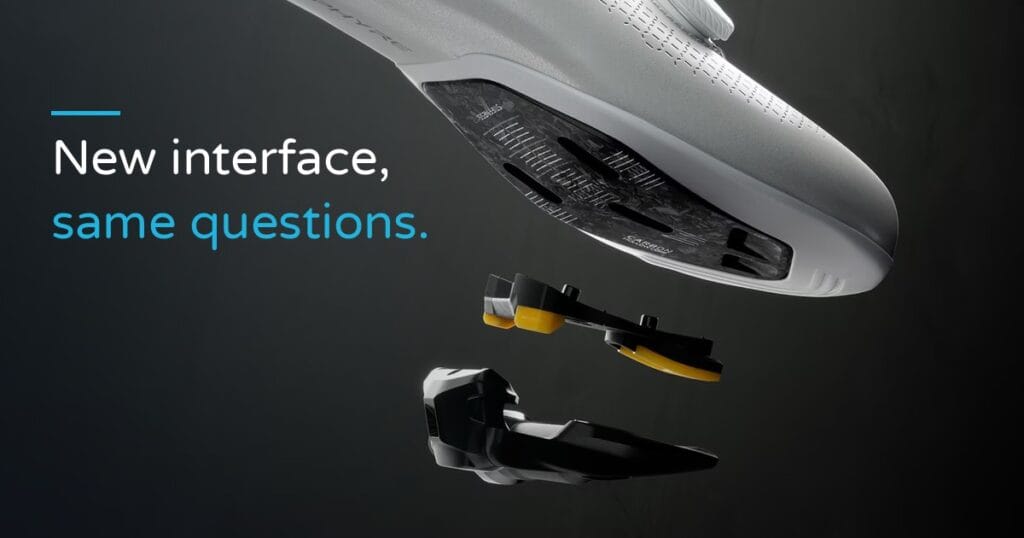
In September 2026, Shimano launched SPD-SLR, the first major update of its road pedal and cleat system in 23 years. The new interface brings the foot closer to the pedal axle and makes clipping in easier.
For a bike fitter, the interesting question is not only what the system gains, but also what it takes away. Here is what I see so far, based on Shimano’s information and the first independent tests.
What changes
Lower stack height: Shimano announced a reduction of 2.3 mm for pedal and cleat together, compared with Dura-Ace SPD-SL. Shimano itself says the effect depends on the rider.
Easier clip-in: The engagement angle goes from 15.5° to 10.5°, with a wider capture zone.
Three cleats, the same float as before: Red has 0° of float, blue 2°, and yellow 6° in total (3° on each side).
Lighter cleats: Shimano claims cleat sets that are up to 22% lighter than SPD-SL.
A grey cleat for other brands: It fits non-Shimano shoes with fixed three-hole drilling and keeps the SPD-SL adjustment range, but not the lower stack height.
What it means for a fit
Cleat position: Early tests report almost no fore/aft adjustment with the SPD-SLR cleats, and the range available depends on the shoe. One reviewer could only reproduce his usual cleat position at the very end of the range in one pair of shoes, and not at all in another.
Extender plates: If the available range is not enough, a cleat extender plate can give more room to adjust the cleat position. It also adds 3.5 mm of height under the cleat, which is more than the 2.3 mm gained.
Compatibility: SPD-SLR cleats do not fit SPD-SL pedals. Switching means new pedals and new cleats, and sometimes new shoes. Shimano says most high-end shoes offer enough range, but has not published data to show it.
Saddle height: 2.3 mm is small, but it is the kind of difference a fit works with. A small saddle height correction may be needed after the change.
Pedal spindle length: Both pedals are available with a 4 mm longer axle, as with SPD-SL. This remains an option when a rider needs more room between foot and crank.
Beyond the cleat
The foot-pedal interface does not stop at the pedal. What happens inside the shoe (insoles that support the foot) and under it (shims and wedges that adjust cleat angle or height) also affects comfort and how the leg tracks. Whatever pedal system you ride, these adjustments are part of a fit, and the right choice depends on your feet and your shoes. You can find out more on my foot-pedal interface page.
Should you switch?
If your position is well set and you are comfortable, there is no hurry. I would wait for more data and more shoe options. If you are about to buy new shoes or a new bike, it is worth checking that your cleats can reach the position your body needs.
The SPD-SLR is a well-designed system, but a more integrated interface does not automatically mean a better fit. What matters is that the system lets your cleats go where you need them. I cover this in my article on the foot-pedal interface.
Not sure what you need? Have a look at my services, or book a session.
Sources: Shimano, BikeRadar, launch article, BikeRadar, review.

